Signs of a pressure tank problem
- The pump turns on and off every few seconds while water runs (short-cycling)
- The pressure gauge needle swings quickly between low and high
- Water spurts or pulses at faucets
- The tank sounds solid with water all the way up when tapped (it should sound hollow near the top)
- Water comes out when the air valve on top of the tank is pressed briefly, which often means a ruptured bladder
- Rust, sweating, or leaks at the tank or its fittings
Signs of a pressure switch problem
- Rapid clicking or chattering at the switch
- The pump won't start even though pressure is low, or won't stop at the normal high pressure
- Pressure no longer matches what it used to be
- Visible burning, pitting, or corrosion on the switch (look only, don't open it)
- A clogged sensing tube or port, which is common with hard, mineral-heavy water
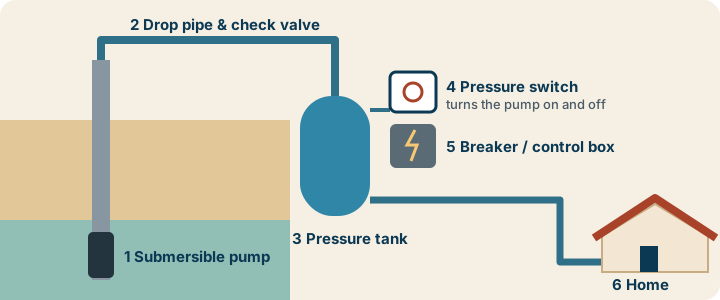
Safe checks you can do
- Watch the gauge while running a faucet. Note the pressure when the pump starts and when it stops.
- Time how long the pump runs each time it starts. Very short runs of a few seconds point to a tank problem.
- Tap the tank from top to bottom and listen for a hollow sound near the top.
- Look for leaks or moisture at the tank, its fittings, and nearby pipes.
Repair or replace?
A switch is a relatively simple part to replace. A tank with a failed bladder is usually replaced, not repaired. A tank that has only lost some air charge can sometimes just be recharged. A contractor will also check whether the tank is the right size for your pump. An undersized tank causes more starts per day.
What affects cost
Price depends on whether it's a switch adjustment, switch replacement, tank recharge, or full tank replacement, plus tank size and type, plumbing changes at the tank tee, gauge and valve parts, and timing. Ask the contractor for a quote first.
Tank & switch FAQ
What does a well pressure tank do?
It stores a reserve of water under air pressure so the pump doesn't have to start every time you open a faucet. A bladder or diaphragm separates the water from a pre-charged air cushion. Fewer starts means less wear on the pump.
What is a waterlogged pressure tank?
A tank that has lost its air charge, often from a failed bladder or a slow air leak. With no air cushion, the pump turns on and off rapidly every time water is used. Pressure swings, and the pump wears out sooner.
What does the pressure switch do?
It senses water pressure and turns the pump on at a lower setting (cut-in) and off at a higher setting (cut-out). Common home settings are ranges like 30/50 or 40/60 psi. Your system's correct settings depend on the pump and tank.
Can I adjust my pressure switch myself?
We don't recommend it. The switch has exposed line-voltage terminals under its cover, and the wrong settings can overwork the pump or exceed what the tank and plumbing are rated for. A licensed contractor can adjust it safely and match the tank charge to the switch.